

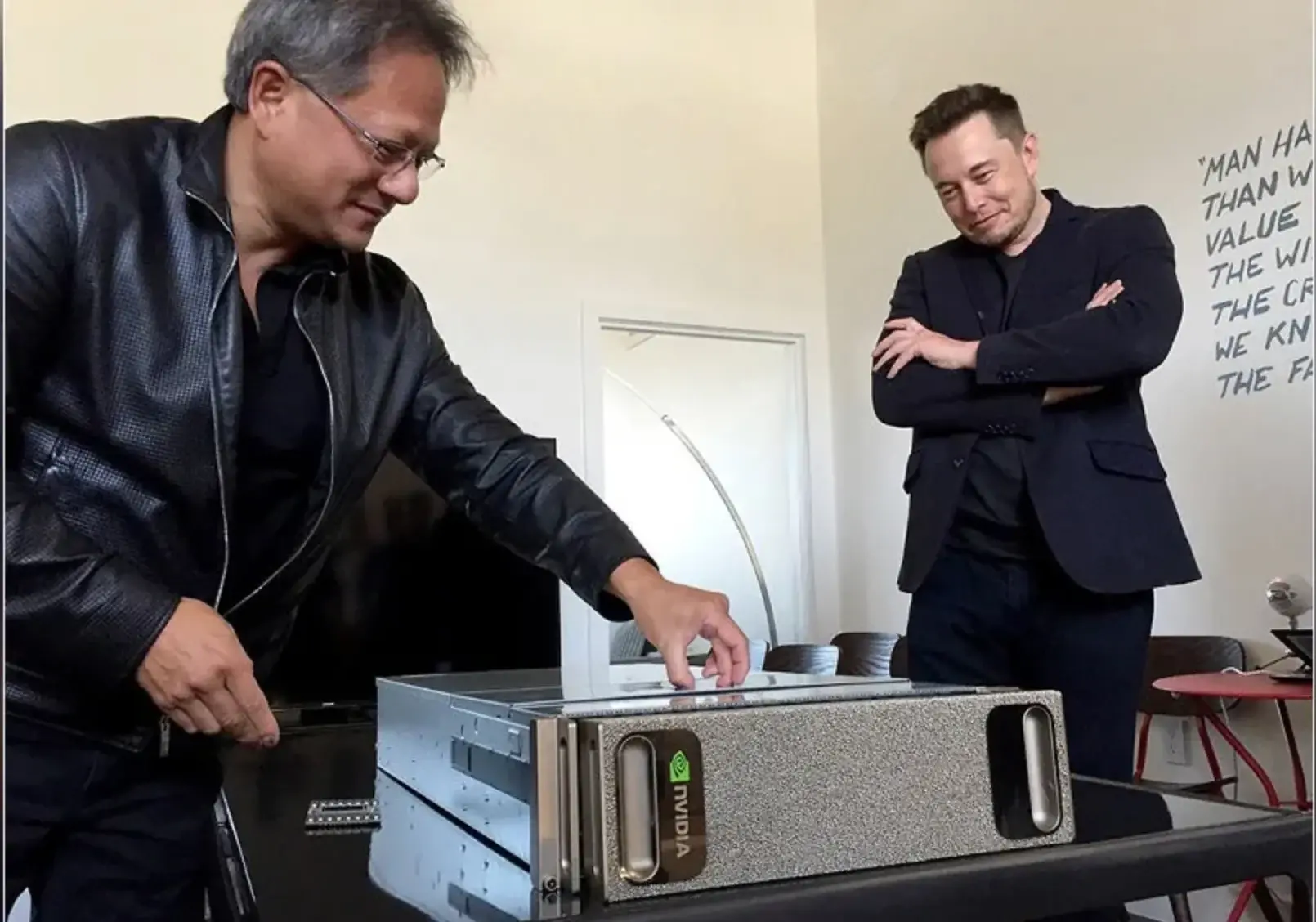
SpaceX is putting all of its artificial intelligence workloads on Nvidia hardware, a strategic pivot that CEO Elon Musk confirmed during the company's first quarterly earnings call as a public company. The announcement marks a decisive shift away from the multi-vendor procurement strategy common at large technology enterprises. Instead of balancing suppliers to reduce dependence, SpaceX will standardize on Nvidia's upcoming architecture, which Musk described as the best AI computer available.
"Going forward, we've decided to build exclusively on Nvidia because we think the Vera Rubin architecture is the best architecture," Musk said on the call. "We think it's the best AI computer, and we greatly value our close cooperation and partnership on many levels with Nvidia. So we're exclusive to Nvidia."
Musk later reiterated on his social media platform that SpaceX has committed to Nvidia GPUs exclusively because they are the best. The comments were intended to reassure investors and partners that despite the company's heavy AI-related spending, the choice of hardware supplier was made on performance merits rather than financial incentives or long-standing relationships.
Nvidia's Vera Rubin architecture takes center stage
Nvidia's Vera Rubin platform is named after astronomer Vera Rubin, who made groundbreaking contributions to the study of dark matter. It is the successor to Nvidia's Blackwell architecture and is expected to bring substantial gains in memory bandwidth, fabric speed, and energy efficiency for large-scale AI training and inference. The architecture is not just a single GPU but a complete computing system, including the NVL72 rack configuration that connects 72 GPUs and 36 CPUs in a single cabinet without traditional cables.
That cable-less design is particularly relevant to SpaceX's ambitions. For terrestrial data centers, removing cables simplifies deployment, improves airflow, and reduces the chance of connection failures. For orbital data centers, the same design can save weight, reduce complexity in a vacuum, and make servicing more practical. Musk revealed during the call that SpaceX plans to launch "Starmind" AI satellites powered by Nvidia's Vera Rubin NVL72 rack system, extending the company's compute infrastructure beyond the Earth's surface.
Rapid expansion of compute capacity
The decision to go exclusive with Nvidia comes as SpaceX scales its data center footprint at an aggressive pace. The company currently aims to exceed 2 gigawatts of total compute capacity by the end of the year. By late 2027, that figure is projected to grow to roughly 10 gigawatts. For context, a modern large data center may consume tens to hundreds of megawatts, so 10 gigawatts represents a massive concentration of computing resources. Much of this capacity will support internal AI products, including the Grok chatbot, AI-assisted software engineering, and cloud-leasing arrangements with partners such as Google and Anthropic.
SpaceX's transformation from an aerospace manufacturer into a major AI infrastructure operator has been rapid but costly. The company reported a quarterly loss of $541 million, largely attributable to heavy spending on AI hardware, data center construction, energy procurement, and personnel. Investors reacted negatively to the widening losses, sending SpaceX shares down more than 7% in after-hours trading. The stock decline occurred even as Nvidia's shares climbed more than 3.4% on the news, reflecting the market's view that the exclusive arrangement is a major win for Nvidia's future revenue pipeline.
A radical departure from conventional IT strategy
Enterprises generally avoid single-vendor lock-in for critical infrastructure. The conventional wisdom in IT procurement is to maintain a portfolio of suppliers to negotiate better pricing, encourage innovation, and protect against supply chain disruptions. By committing exclusively to Nvidia, SpaceX is deliberately rejecting that playbook. AMD, Intel, and Broadcom are now excluded from SpaceX's AI hardware roadmap, at least for the foreseeable future.
This choice carries several risks. Nvidia already dominates the AI accelerator market, and demand for its products far exceeds supply. If Nvidia encounters semiconductor production delays, packaging constraints, or other manufacturing bottlenecks, SpaceX would have no alternative source for high-end AI compute. A single architectural choice also means that any design flaw or security vulnerability in Nvidia's stack would directly affect all of SpaceX's AI operations.
Regulatory scrutiny is another factor. Antitrust authorities around the world are increasingly focused on concentration in AI hardware and software markets. A public commitment by a high-profile company to use Nvidia exclusively could attract further investigation into Nvidia's pricing power, bundling practices, and long-term supply agreements. If regulators impose restrictions on Nvidia or require changes to its commercialization model, SpaceX would have limited flexibility to adapt.
Orbital data centers and untested challenges
The Starmind satellite plan is perhaps the most ambitious element of the announcement. Placing high-density AI compute in orbit would theoretically eliminate the need for terrestrial real estate, cooling water, and certain regulatory approvals. It could also enable low-latency AI processing directly above or near remote regions. However, the engineering challenges are formidable. Data center equipment is designed for gravity, temperature stability, and human maintenance. In the microgravity of low Earth orbit, heavy server racks need customized structures to remain rigid, heat dissipation cannot rely on convective air cooling, and radiation can degrade electronics over time.
Even if SpaceX successfully launches Nvidia's NVL72 units into orbit, maintaining and upgrading them presents a new logistical puzzle. The NVL72 rack is a dense, specialized system that typically requires professional installation and service. In a vacuum environment, cooling loops and power distribution must be redesigned. The vacuum also affects the behavior of thermal compounds and mechanical components, and any repair mission would require expensive rendezvous and docking operations. SpaceX has extensive experience with orbital servicing through its Starship and Dragon programs, but operating a data center in space remains significantly different from operating conventional satellites.
The rise of Nvidia's AI ecosystem
Nvidia's ascent in AI compute has been decades in the making. The company originally designed graphics processing units for gaming, but researchers in the early 2000s discovered that GPUs could handle parallel mathematical workloads far more efficiently than central processing units. Nvidia built on that insight with the CUDA programming platform, which made its hardware accessible to programmers and researchers. By the time deep learning exploded in the 2010s, Nvidia was the undisputed leader in training large neural networks. The launch of the A100, H100, and B200 data center GPUs solidified its position, and the Vera Rubin platform is set to extend that dominance.
SpaceX and xAI integration
SpaceX's AI business is closely tied to xAI, the company Musk founded to develop artificial intelligence systems capable of understanding the universe. The AI systems use enormous clusters of GPUs to train models on internet-scale data, with Grok serving as the consumer-facing chatbot. After the creation of xAI, Musk gradually moved resources from across his companies into AI development, while also maintaining separate partnerships with cloud providers. The exclusive Nvidia commitment signals that SpaceX intends to internalize the entire AI stack, rather than relying on cloud providers such as AWS, Microsoft Azure, or Google Cloud for its most demanding workloads.
Wall Street and analyst reactions
Wall Street analysts appear split between enthusiasm for Nvidia's growing pipeline and concern for SpaceX's bottom line. Wolfe Research analyst Chris Caso wrote in a client note that the SpaceX roadmap could drive substantial revenue growth, and that these comments provide evidence that AI infrastructure spending is likely to remain robust. Many investors worry that the AI boom is a bubble, with companies spending billions on chips and data centers without a clear path to profitability. Musk's insistence on exclusive Nvidia adoption counters those fears by showing that a major, fast-growing company is willing to commit billions more to AI capacity.
Still, the company's financial results highlight the tension between growth and profitability. SpaceX's AI segment, largely built through the integration of xAI operations, has generated multibillion-dollar losses, while Starlink continues to produce revenue from consumer and enterprise internet services. The earnings call marked the first time investors could evaluate these segments side by side in a public filing. Musk framed the AI spending as necessary to secure leadership in the most competitive technology market of the coming decade.
What the exclusive deal means for Nvidia
For Nvidia, the exclusive arrangement with SpaceX is both a financial win and a powerful validation of its product roadmap. Capturing the AI infrastructure buildout of an aerospace and communications company with ambitions in space data centers suggests that Nvidia's ecosystem extends far beyond traditional cloud providers. It also strengthens Nvidia's negotiating position with other customers, because a commitment of this size demonstrates that the company's latest architecture can support workloads ranging from natural language processing to satellite operations.
The deal may also accelerate Nvidia's development of specialized products for non-terrestrial environments. Space-grade semiconductors are usually years behind their terrestrial counterparts because radiation hardening and thermal constraints force lower performance. By partnering with SpaceX on Starmind, Nvidia could adapt its commercial AI systems for orbital use, creating a new market for space-rated compute that did not previously exist. If successful, Starmind could become the first orbital AI cloud service, offering computational power to government agencies, research institutions, and commercial customers that need data processing in space for Earth observation, communications, navigation, and other applications.
Strategic implications for enterprise technology
Musk's announcement is likely to resonate beyond SpaceX's shareholder base. Technology leaders at other enterprises often look to the actions of major AI adopters to calibrate their own infrastructure strategies. A decision by one of the world's highest-profile companies to abandon vendor diversification may prompt some organizations to reconsider their aversion to lock-in. If maximum performance is the only objective, a single-vendor architecture can deliver advantages in integration, support, and performance optimization that multi-vendor environments cannot easily match.
However, most enterprises operate under constraints that SpaceX does not face. SpaceX has access to enormous capital, a dedicated engineering team, and a mission-oriented culture that tolerates high risk. A typical enterprise may lack the resources to manage the consequences of a severe supply disruption. For every company that adopts an exclusive Nvidia strategy, many more will continue to rely on a mix of Nvidia, AMD, Intel, and custom silicon such as Google's TPUs and Amazon's Trainium chips.
The broader AI industry will be watching closely to see whether SpaceX can execute its 10-gigawatt roadmap without experiencing major delays or cost overruns. The company has a history of ambitious timelines and late deliveries in its rocket and satellite programs, but it has also repeatedly demonstrated the ability to push through engineering challenges that seemed impossible to outsiders. If SpaceX succeeds in building the world's first large-scale orbital AI data center, the decision to go exclusive with Nvidia may be remembered as a pivotal moment in the history of high-performance computing. If it fails, the same decision will become a case study in the dangers of putting all hardware eggs in one basket.
Source: eWeek News