

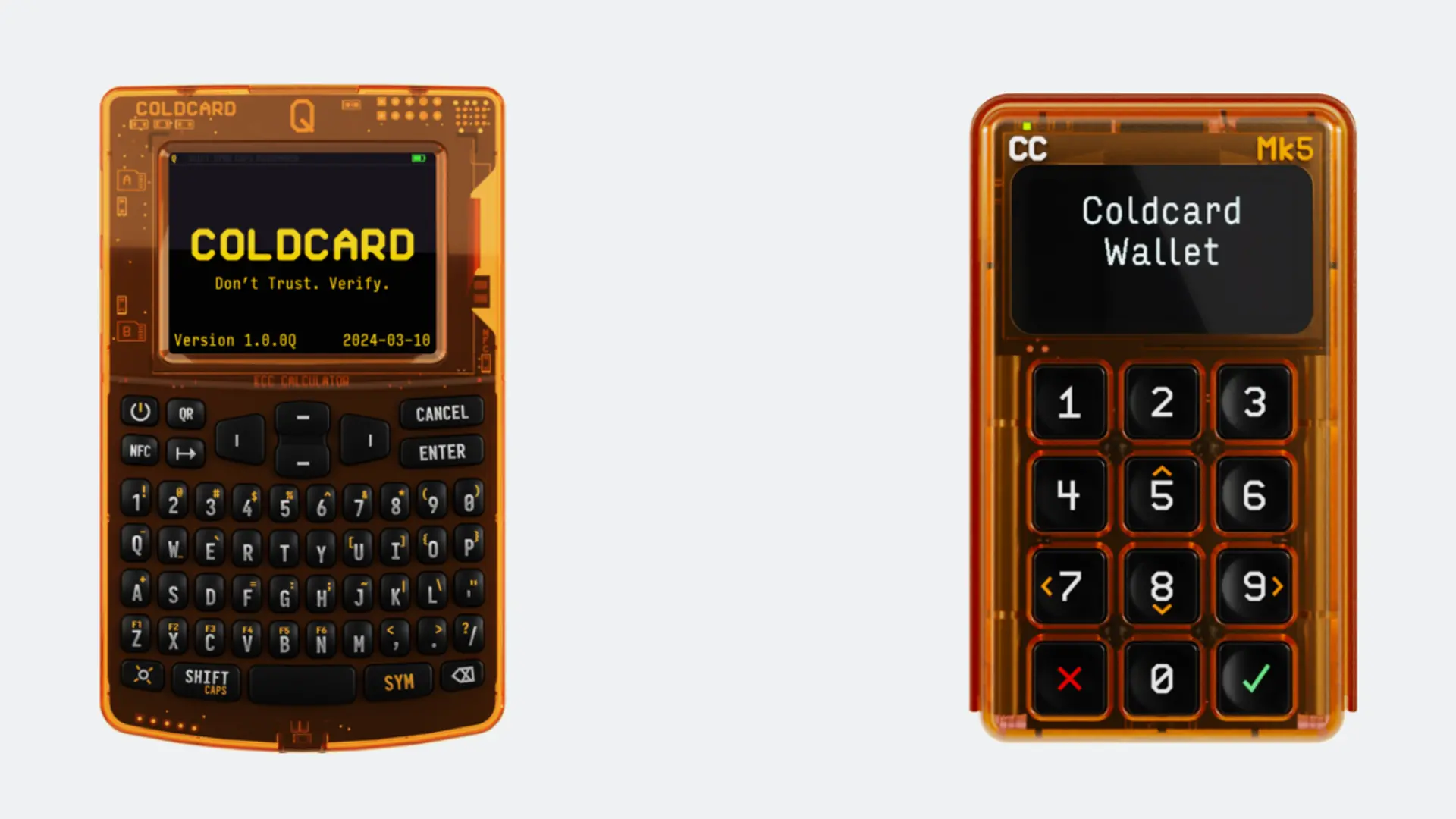
Coldcard, the popular Bitcoin hardware wallet manufacturer, has issued an urgent warning to users to move their funds immediately as an exploit that has already siphoned off as much as $114 million from self-custodied wallets remains live. The company revealed that the flaw, which has been dormant in firmware since 2021, permits attackers to guess poorly randomized seed keys and drain funds from vulnerable devices.
What Is Coldcard?
Coldcard is a line of hardware wallets produced by Coinkite, a Canadian company known for its focus on security and Bitcoin-only support. Unlike many competitors that offer multi-currency support and mobile app integration, Coldcard devices are designed for users who prioritize maximum control and offline storage. The wallets are often marketed to advanced users, with features like air-gapped signing, USB and SD card data transfer, and a built-in secure element. The Mk4 model, which is central to this exploit, is one of the most widely used devices in the product line.
Hardware wallets are considered a cornerstone of self-custody in the cryptocurrency ecosystem. They store private keys offline, protecting them from remote attacks and malware. However, the security guarantees of these devices depend heavily on the randomness of the seed generation process. If the random number generator is flawed, an attacker can potentially reproduce the seed phrase and steal funds.
The Exploit and Its Impact
The exploit currently in progress targets wallets that were created using deterministic random number generation on certain Coldcard models. According to the developers, the issue affects Mk3 devices that have been set up on firmware version 4.0.1 or later, as well as Mk4, Mk5, and Q devices running older firmware. The vulnerability stems from a flaw in the way the devices generate seed entropy, which can lead to predictable private keys in some cases.
This is not the first time that hardware wallet security has come under scrutiny. Previous incidents involving other manufacturers have shown that even the most secure devices can be compromised if the random number generator is flawed. In this case, the flaw appears to have been exploited for some time before being discovered. Coldcard has not disclosed how the exploit was found, but the company has been actively monitoring the situation and has already begun rolling out firmware updates to mitigate the risk.
The reported $114 million in losses is a staggering figure, and it highlights the importance of using reliable and tested hardware wallets. Self-custody is often recommended as a best practice for Bitcoin holders, but it also comes with significant responsibilities. Users must ensure that their devices are up to date and that they follow security best practices to protect their funds.
Affected Models and Firmware Versions
The vulnerability is specific to certain devices and firmware versions. Coldcard has provided a detailed breakdown of the affected models:
- Mk3: Devices set up on firmware version 4.0.1 or later are vulnerable. Earlier firmware versions are not affected by this particular flaw.
- Mk4: Devices running firmware versions prior to the latest security patch are exposed. The Mk4 is the most popular model in the current lineup.
- Mk5: The Mk5, which is the newest model, is also affected if running older firmware versions.
- Q: The Coldcard Q, a more advanced device with additional features, is vulnerable on older firmware as well.
Importantly, wallets that were created using the dice-roll option are considered safe. The dice-roll feature allows users to generate seed entropy using physical dice rolls, which provides a much higher degree of randomness compared to the built-in random number generator. This is a manual process that verifiable randomness from physical sources, making it immune to the exploit.
Coldcard has advised users who believe they might be affected to transfer their Bitcoin to another wallet immediately. The company is working on firmware updates that will patch the vulnerability, and these updates are being rolled out as quickly as possible. However, given that the exploit is still live, users should not wait for the update to move their funds.
How the Exploit Works
While Coldcard has not disclosed the exact technical details of the exploit, the root cause appears to be related to the device's random number generator. If the generator produces predictable output, an attacker can brute-force the private key by iterating through possible seed values until they find the correct one. This can be done relatively quickly if the amount of entropy is low.
The flaw is believed to have been introduced in firmware version 4.0.1, which was released in 2021. This means that any wallet created on an affected device since that time could be at risk. The fact that the exploit has remained undetected for so long is concerning, and it underscores the need for continuous security auditing in the cryptocurrency space.
The exploit is also a reminder that the security of a hardware wallet is only as strong as its weakest link. Even if the device itself is secure, a flawed random number generator can undermine all other security measures. This is why many security experts recommend using open-source wallets and firmware, as they can be audited by the community.
Background: Previous Hardware Wallet Vulnerabilities
Hardware wallets have been targeted in the past, though the nature of the attacks has varied. In 2019, researchers demonstrated a supply chain attack on a popular hardware wallet that allowed them to inject malicious code during the manufacturing process. In another incident, a flaw in the Electron app used by a major wallet provider led to funds being stolen via a man-in-the-middle attack.
However, the Coldcard exploit is notable because it affects the process of seed generation itself. This is the most critical part of a hardware wallet's operation, and a failure here compromises the entire security model. The fact that the flaw has been exploited to the tune of $114 million suggests that the attackers have been highly successful in targeting Coldcard users.
This incident also highlights the broader challenges facing the cryptocurrency industry as it attempts to balance security and usability. Hardware wallets are often recommended for users who want to hold significant amounts of Bitcoin, but they are not immune to sophisticated attacks. As the value of cryptocurrencies continues to rise, the incentive for attackers to target wallet providers and users will only increase.
What Should Users Do?
Coldcard has issued clear guidance for users who may be affected by the exploit. The immediate priority is to move funds to a secure wallet. This can be done by creating a new wallet on a device that is not affected by the vulnerability, or by using a different hardware wallet altogether. Users should also ensure that they are using the latest firmware version, as this may contain security patches.
For users who are unsure whether their wallet is affected, Coldcard has provided a tool on its website that allows users to check the status of their device. The tool requires users to enter their device's model and firmware version, and it will indicate whether the device is vulnerable. This is a critical first step in securing funds.
It is also recommended that users who rely on hardware wallets understand the importance of seed phrase backup. In the event that a wallet is compromised, the seed phrase is the only way to recover funds. Users should ensure that their seed phrase is stored securely and has not been exposed to untrusted parties.
The exploit serves as a wake-up call for the cryptocurrency community. While self-custody is essential for maintaining control over one's assets, it requires constant vigilance and adherence to security best practices. Regular firmware updates, careful seed management, and using devices from trusted manufacturers are all part of a robust security strategy.
Coldcard's Response and Industry Implications
Coldcard has been transparent about the exploit, providing timely updates on its official channels. The company has acknowledged the severity of the situation and has committed to supporting users through the recovery process. However, the incident raises questions about the broader industry's approach to security auditing and disclosure.
Hardware wallet manufacturers must become more proactive in identifying and addressing vulnerabilities before they can be exploited. This includes investing in regular security audits, bug bounty programs, and community testing. In the case of Coldcard, the fact that the flaw went unnoticed for years indicates that there may be gaps in the current security review processes.
The cryptocurrency market has responded calmly to the news, with Bitcoin's price remaining near $63,800 despite the warning. This suggests that investors are becoming more accustomed to security incidents in the space, but it does not diminish the severity of the impact on affected users. For those who have lost funds, the financial and emotional toll can be significant.
Looking Ahead
As Coldcard works to release patched firmware and assist affected users, the incident serves as a reminder of the risks inherent in self-custody. While hardware wallets are generally considered a safe way to store Bitcoin, this exploit shows that no solution is foolproof. Users must stay informed about the latest security threats and take proactive measures to protect their assets.
In the coming weeks, Coldcard is expected to provide more details about the root cause of the vulnerability and the exact timeline of the exploit. The company may also face legal and reputational consequences as a result of the incident. For now, the priority is to ensure that remaining funds are moved to safety and that the exploit is neutralized.
The Coldcard exploit will likely be studied by security researchers for years to come, serving as a case study in the importance of random number generation and the challenges of securing cryptographic devices. As the cryptocurrency industry continues to evolve, incidents like this will help shape the future of hardware wallet security and encourage manufacturers to adopt more rigorous testing standards.
Source: Coindesk News